Vol. 3 No. 3 (2025): Recent Advances in Production, Storage, Transportation and Utilization of Hydrogen Energy

Guest Editor: Prof. Junhu Wang, Mössbauer Effect Data Center, CAS Key Laboratory of Science and Technology on Applied Catalysis, Dalian Institute of Chemical Physics, Chinese Academy of Sciences, China

This issue entitled "Recent Advances in Production, Storage, Transportation and Utilization of Hydrogen Energy"will feature papers on hydrogen production by photocatalysis/electrocatalysis/thermocatalysis, the transportation and storage, fuel cell, energy system of hydrogen-electric coupling, key technologies and efficient utilizations, etc. Volume 3, Issue 3 will be fully online by September 2025.

Published: 2025-05-29

Article

  • Open Access

    Article ID: 447

    Supplementary theoretical design framework for Type IV hydrogen storage vessel liners: A minimum wall thickness addressing discharge buckling failure

    by Xiulei Wang, Yan Zha, Pengcheng Xie, Weimin Yang
    Clean Energy Science and Technology, Vol.3, No.3, 2025;
    173 Views

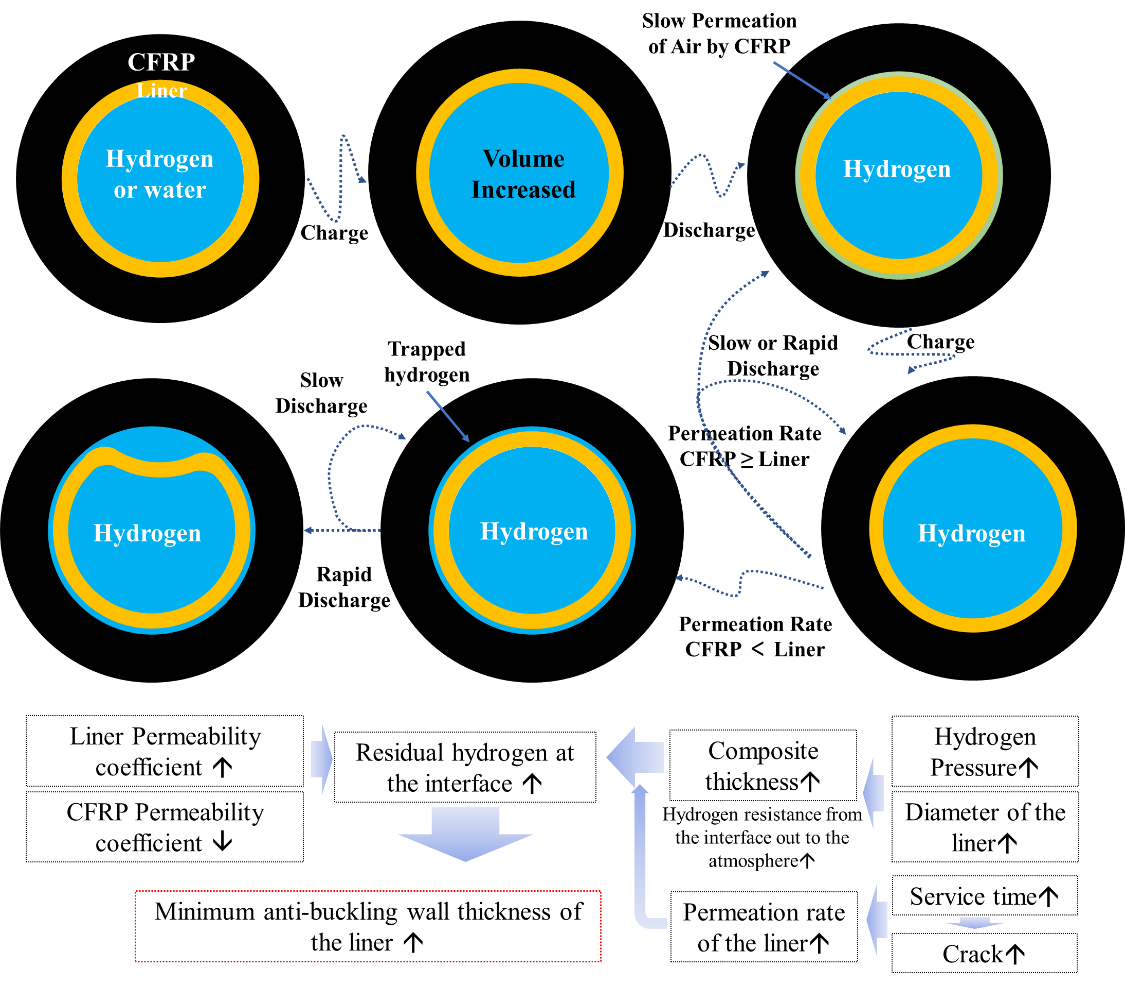
    The plastic liner is critical in Type IV hydrogen storage tanks due to its lightweight and hydrogen anti-embrittlement properties. However, hydrogen permeation from free volume and accumulation at the liner-composite interface can cause buckling under inappropriate rapid discharge. Existing studies focus on evaluating buckling under the assumption of its inevitability, examining parameters such as Thickness-to-diameter ratio and discharge rate, but neglect the underlying permeation-structure interaction and lack a systematic design approach for minimizing liner thickness. This work introduces a novel theoretical framework to determine the minimum wall thickness that prevents buckling under any discharge condition by coupling material permeability, structural parameters, and service pressure. The method allows early safety validation via material-level testing, reducing the need for extensive cycle type tests. Furthermore, a large-capacity hydrogen storage vessel is taken as an example, and representative experimental data are analyzed. This research provides a foundational design tool enhancing reliability, cutting development cost, and supporting standard optimization for high-pressure hydrogen vessels.

  • Open Access

    Article ID: 459

    Multi-condition sensitivity analysis of proton exchange membrane electrolysis cell using a segmented diagnostic method

    by Zhi Liu, Jinde Hao, Zongyang Yu, Yanting Ma, Kang Wang
    Clean Energy Science and Technology, Vol.3, No.3, 2025;
    194 Views

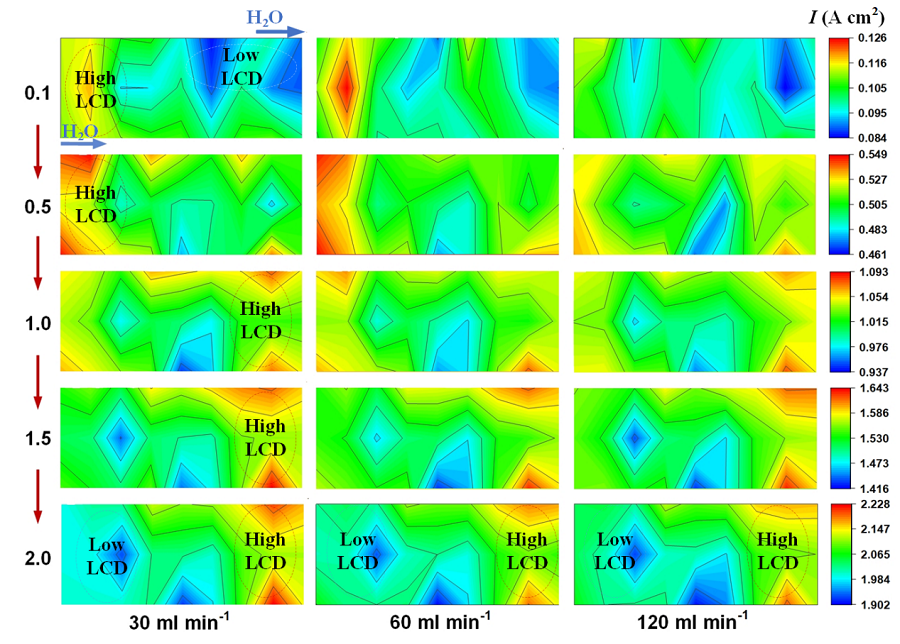
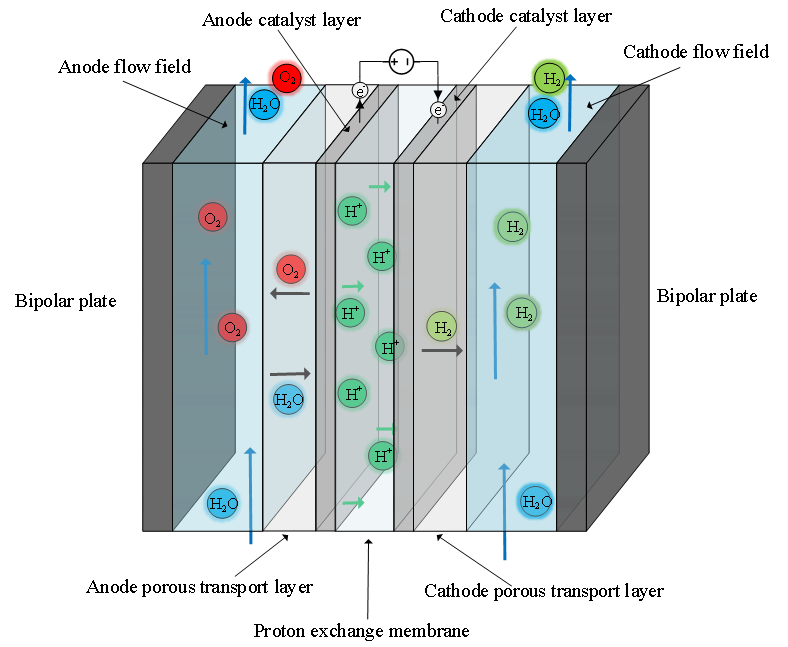
    Understanding the distributions of electrochemical reaction, current density and temperature is important to improve the performance of proton exchange membrane electrolysis cell (PEMEC). Therefore, this study developed a PEMEC testing platform based on a segmented diagnostic technique and systematically analyzed the performance sensitivity and uniformity distribution of the electrolysis cell under varying water flow rates, operating temperatures, and bolt torques. The results indicate that the operating temperature exhibits the highest performance sensitivity while the water flow rate has lowest sensitivity to the PEMEC performance. Increasing water flow rate improves the bubble removal and uniformity distributions of current density and temperature, resulting in improved performance at high current density. A high bolt torque reduces contact resistance and increases uniformity distributions inside electrolyzer, thereby reducing the ohmic losses and output voltage. The elevated temperatures enhance electrochemical kinetics, heat production and uniformity distributions of current density and temperature, indicating performance improvement. The current study consolidates the understanding of influencing mechanisms of different operating conditions on distribution characteristics of multiple physical fields, contributing to enhance electrolyzer performance.

  • Open Access

    Article ID: 376

    Assessment issues on electrochemical catalysis for water splitting

    by Yu Sun, Huizhen Han, Yulian Zhao, Shiyi Tao, Yajie Guo, Jian Ouyang, Xin Bo
    Clean Energy Science and Technology, Vol.3, No.3, 2025;
    299 Views

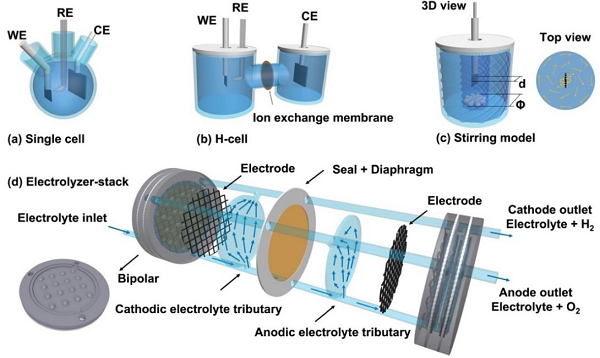
    A number of catalysts have been developed for electrochemical water electrolysis in the last decades, however, the inadequate understanding and the non-standard measurements result in inaccurate activity evaluation. Especially at present, water electrolysis aims to deal with higher-current-density scenario, and the exaggeration for catalysts heavily mislead to unnecessary trial and error in the real application. The dynamic lineage sweep voltammetry, as a universal estimation method to evaluate the activity of material, is discussed, including the issues on electrochemical assessment and the possible factors to inaccuracy. Accordingly, we cast our own opinions and suggestions in practice, such as building the reasonable electrolytic cell system, including the electrode position, size, electrolyte, cell types, scan rate, stirring, selection of the counter and reference electrodes, etc. The IR compensation on resistance and conversion of specific activity are also mentioned. We suggest that the researchers should operate in a standardized manner and obtain the authentic data, without intentionally hiding the tricky experiment settings.

  • Open Access

    Article ID: 393

    Mass transfer enhancement and cell performance promotion of PEM electrolyzer by biomimetic lung-inspired flow field

    by Yanan Yang, Guo'an Yang, Fengming Chu
    Clean Energy Science and Technology, Vol.3, No.3, 2025;
    279 Views

    Hydrogen energy represents a pivotal component in global energy transition strategies, with proton exchange membrane water electrolysis emerging as a key technology for sustainable hydrogen production. The optimization of flow fields critically governs the operational efficiency of proton exchange membrane electrolyzer cell (PEMEC). This study introduces a biomimetic lung-inspired flow field (LIFF) design to address challenges in mass transfer, temperature and liquid saturation uniformity index within PEMEC. A comparative analysis is conducted among three flow configurations: conventional single serpentine flow field (SSFF), interdigitated flow field (IFF), and the proposed LIFF. A multiphysics computational fluid dynamics model is employed to simulate coupled electrochemical and transport phenomena. Results demonstrate that the LIFF’s pressure-driven flow mechanism significantly enhances reactant distribution, particularly under channel ribs. At 2.3 V operation, the LIFF achieves an 8.04 times improvement in axial mass transfer coefficient compared to SSFF and 39.14% superiority over IFF. The liquid saturation uniformity index of LIFF increased by 22.04% and 4.83% compared to SSFF and IFF, respectively. The temperature uniformity index of LIFF shows improvements of 69.98% and 35.22% over SSFF and IFF. Parametric analysis reveals that increased operational temperatures improve electrochemical polarization, while higher flow rates enhance mass transport efficiency. Strategic reduction of inlet water temperature combined with increased flow rates enhances liquid saturation uniformity index and improves temperature uniformity index.

  • Open Access

    Article ID: 374

    Investigation of multilayer Ni-Mg-Ni-Mg film structures and development of a prototype of film metal-hydride hydrogen accumulator

    by Alexander G. Ivanov, Dmitri A. Karpov, Evgeniy S. Chebukov, Michael I. Yurchenkov
    Clean Energy Science and Technology, Vol.3, No.3, 2025;
    432 Views

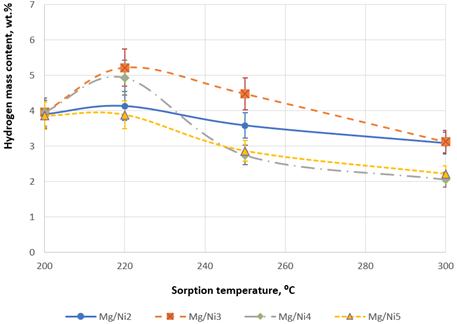
    The structural and sorption/desorption characteristics of multilayer Ni-Mg-Ni-Mg films (38/37 Ni/Mg layers with a total thickness up to 45 µm) deposited on both small-sized and extended tape (up to 40 m) polyimide substrates by magnetron sputtering have been studied. A trend was observed between the growth of hydrogen mass content in the films and the increase in the number of sorption/desorption cycles which is accompanied by the increase in MgH2 phase from 53 wt.% to 78 wt.% and Mg2NiH4 phase from 0.1 wt.% to 19.9 wt.%. Long-length samples (5 m and 40 m) of Ni-Mg-Ni-Mg film structures as metal hydride hydrogen accumulators have been tested. A reversible mass content of hydrogen they contain has exceeded 4 wt.% at an outlet pressure of 1 atm. Based on the conducted research, a prototype of film metal-hydride hydrogen accumulator was elaborated, then manufactured and tested. The design of the developed prototype and the results of its tests are presented. With stored hydrogen of 3.6 g, specific gravimetric energy capacity of the prototype accumulator was 400 Wh/kg, and specific volumetric energy capacity was 600 Wh/L.

Review

  • Open Access

    Article ID: 455

    Next-generation photoelectrocatalysts: Real-time characterization and applications in sustainable energy and environment

    by Ganeshraja Ayyakannu Sundaram, Junhu Wang
    Clean Energy Science and Technology, Vol.3, No.3, 2025;
    238 Views

    The twin global challenges of energy scarcity and environmental pollution call for innovative and sustainable technological solutions. Photoelectrocatalysis has emerged as a promising strategy for solar-driven water splitting and environmental remediation, offering an eco-friendly route for hydrogen production and pollutant degradation. At the heart of this progress are hybrid catalysts, which integrate multiple material components to synergistically enhance light absorption, charge separation, and catalytic efficiency. However, optimizing these intricate systems requires a thorough understanding of their behaviour under real-world operating conditions. This review provides a critical overview of the design principles, classifications, and synthesis methods of hybrid photoelectrocatalysts, with particular attention to their applications in water splitting and environmental cleanup. Special emphasis is placed on the use of real-time (in-situ and operando) spectroscopic techniques such as X-ray absorption, Raman, Mössbauer and transient absorption spectroscopies, which offer vital insights into active sites, reaction intermediates, and structure–performance relationships. These advanced tools are essential for guiding the rational design of catalysts and enhancing their durability. We also address current challenges, including issues of material stability and the intricacies of real-time analysis, and highlight emerging directions such as artificial intelligence-driven catalyst discovery and the integration of multiple spectroscopic methods. By bridging materials engineering with mechanistic insight, this review outlines a roadmap for developing next-generation photoelectrocatalysts aimed at scalable, sustainable solutions for energy and environmental needs.

  • Open Access

    Article ID: 414

    Advances in electrocatalytic nitrite reduction to ammonia: Mechanisms, catalyst design, and future perspectives

    by Hushan Zhang, Xinghe Wang, Min Luo, Xiaoman Li
    Clean Energy Science and Technology, Vol.3, No.3, 2025;
    131 Views

    Electrocatalytic reduction of nitrite to ammonia (NO2RR) is an environmentally friendly and low energy consuming emerging technology with broad prospects. This article reviews the latest developments and explores the mechanism of NO2RR, including key steps such as nitrite adsorption, activation, multi-step reduction, and ammonia desorption. The reaction under both acidic and alkaline conditions are systematically analyzed. At the same time, the article deeply analyzes various catalyst design strategies, such as vacancy engineering, atomically dispersed metal sites, engineering interfaces for synergistic catalysis, hybrid-atom doped catalysts, and molecular catalysts, and summarizes the performance advantages and limitations of each type of catalyst. In addition, methods to improve catalyst selectivity and stability were explored, and challenges faced in this field were pointed out, such as the balance between catalyst activity and stability, complex reaction pathways, insufficient large-scale preparation techniques, and dynamic mechanism analysis. Finally, future development directions were proposed, including the development of new materials, precise design of selective active sites, optimization of preparation processes, and promotion of interdisciplinary research. This review provides a systematic reference for the mechanism exploration and rational design of catalysts in electrocatalytic nitrite reduction technology and is expected to promote its practical application in green ammonia synthesis and environmental remediation.

  • Open Access

    Article ID: 406

    Is it possible to utilize photoelectrochemical, photochemical and photocatalytic reactions to harvest sunlight to meet the energy needs of the society? – A critical evaluation

    by Ibram Ganesh
    Clean Energy Science and Technology, Vol.3, No.3, 2025;
    154 Views

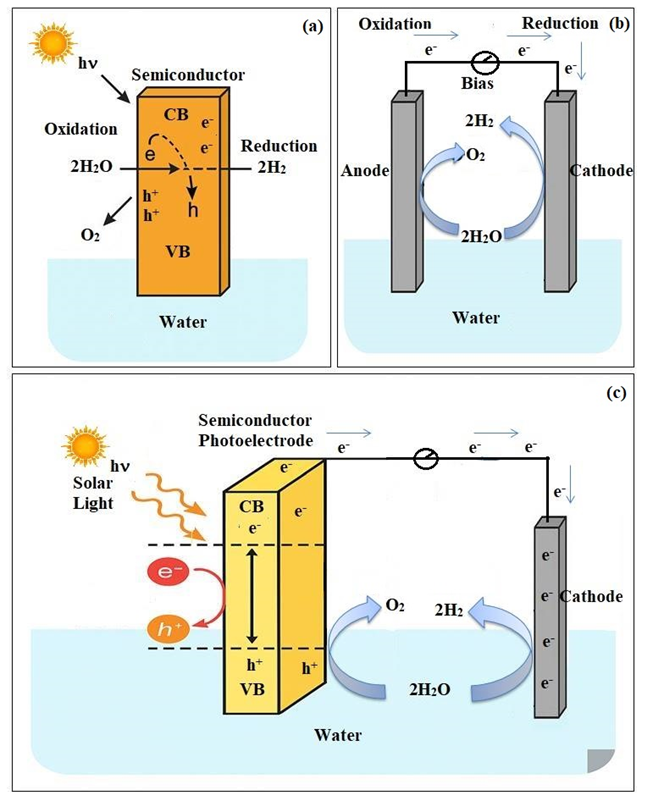
    Today our society is not only meeting >81% of its energy needs but also generating >81% economy by burning fossil fuels. Fossil fuels are nothing but solar energy stored by plant leaves by using CO2 and water, which cannot sustain our civilization economic growth. Furthermore, they are generating global warming causing greenhouse CO2 gas a by-product. As a part of generating alternative renewable energy vectors, a lot of research has been carried out so far to harvest sunlight by using CO2 and water as energy storing materials in the form of chemical fuels by following photoelectrochemical (PEC), photochemical and photocatalytic routes. Although, so far a half-a-million research articles have been published on all these subjects, the one that can be practiced at industry with economic viability is yet to be reported. In this review article, i) all the so far published articles, ii) the kind of sunlight reaching the earth surface, iii) the kind of semiconducting materials developed or identified so far, iv) why no reported method is being practiced at industry today for solar energy harvesting in the form of chemical and/or solar fuels to meet the energy needs of the society except only thin film based surface related photocatalytic spontaneous energy none-storing reactions such as, self-cleaning surfaces, etc., have been critically analyzes and reported while citing all the relevant and recent references.

  • Open Access

    Article ID: 337

    Advances in layered double hydroxides for direct seawater electrolysis: Challenges, strategies, and future perspectives

    by Ketong He, Yingni Zhou, Zheling Wang, Yaoting Huang, Huijuan Dong, Ce Zhou, Hong Xia, Fushen Lu, Yibing Song, Muwei Ji
    Clean Energy Science and Technology, Vol.3, No.3, 2025;
    502 Views

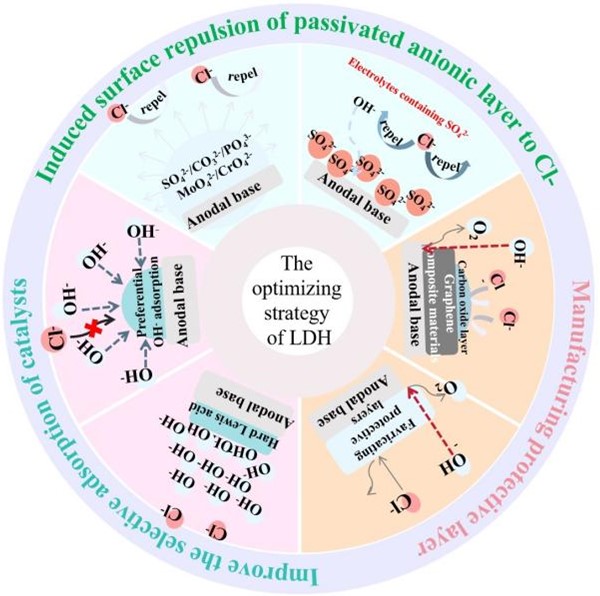
    Direct electrolysis of seawater to produce hydrogen is one of the promising and low-cost ideal hydrogen production technologies. However, being different from freshwater electrolysis, seawater contains lots of ions, microorganisms, and other impurities, which make seawater electrolysis more challenging. In particular, the chloride ion in seawater usually results in a chlorine evolution reaction (CER) and competes with the oxygen evolution reaction (OER) at the anodes, the dominant rate-determining step of overall water electrolysis. In recent years, layered double hydroxides (LDHs) have attracted attention because of their excellent OER activity in alkaline solutions. In this paper, the research progress of LDHs in seawater electrolysis is reviewed, including the structure design and optimization strategies for protecting catalytic sites from Cl corrosion, and the mechanism study to reveal the inhibition of CER during the OER process. The challenges in improving the corrosion resistance of LDHs in seawater electrolysis are concluded to provide some possible and available ways of seawater electrolysis for generating green hydrogen.

  • Open Access

    Article ID: 369

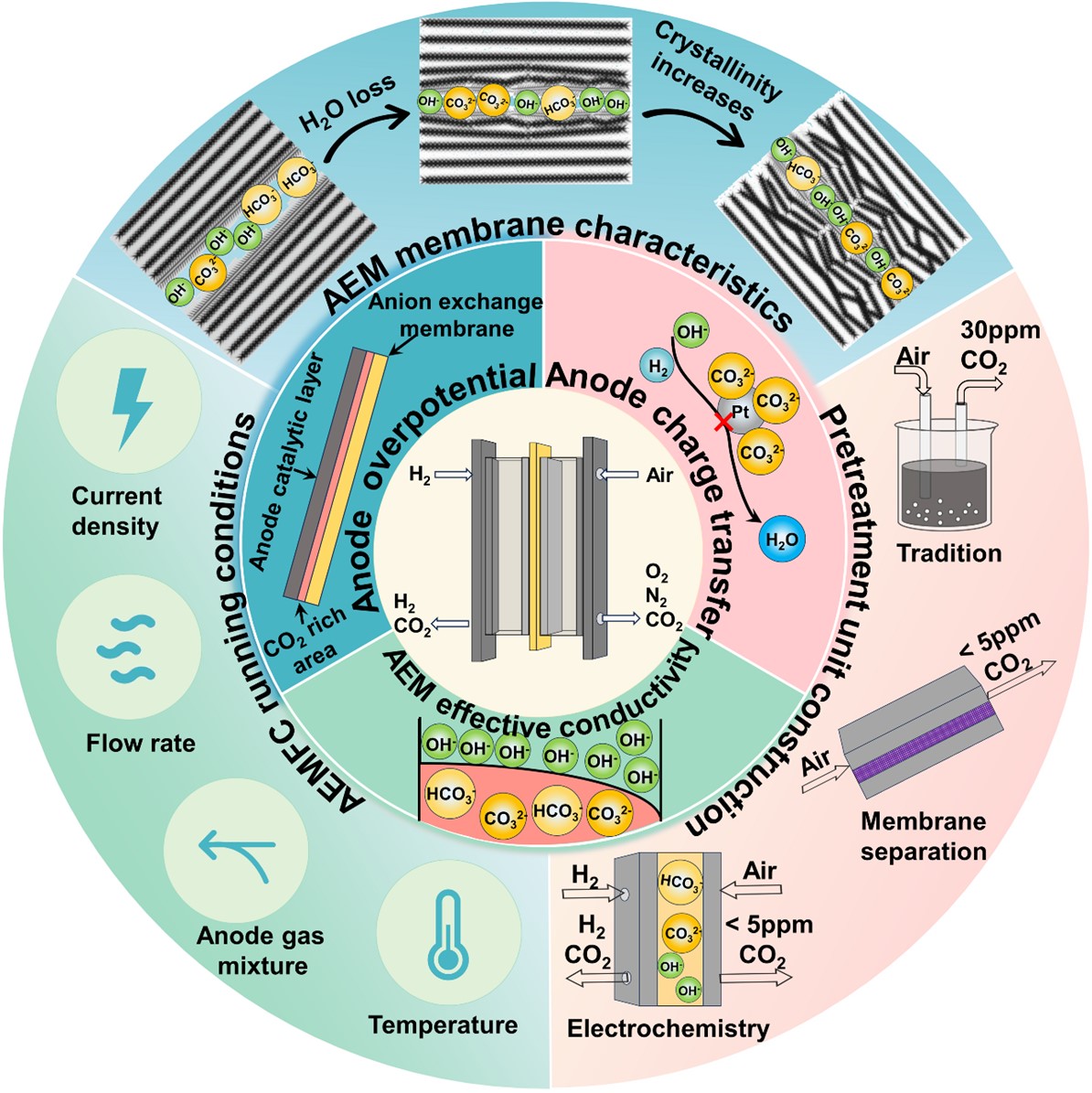
    Impact of inlet CO2 on the performance of AEMFCs: Mechanistic insights and mitigation strategies

    by Xianglin Kong, Lingling Wang, Wei Yu, Jiangsan Xu, Yifan Li
    Clean Energy Science and Technology, Vol.3, No.3, 2025;
    957 Views

    Anion exchange membrane fuel cells (AEMFCs) offer a lower assembly cost compared to proton exchange membrane fuel cells (PEMFCs), as their alkaline environment enables the use of inexpensive catalysts and bipolar plates. Currently, most performance evaluations of AEMFCs are conducted with O2 as the cathode gas. However, the ultimate goal of AEMFCs is to operate with ambient air as the cathode feed. CO2 in the air often exerts a significant negative impact on AEMFC performance, particularly by reducing the conductivity of the alkaline electrolyte and diminishing the overall efficiency of the cell. This challenge has become one of the primary barriers to the widespread adoption and optimization of AEMFC technology. This work reviews relevant studies by previous researchers and identifies three main mechanisms through which CO2 adversely affects AEMFC performance: (1) the formation of carbonate ions, which reduces the effective conductivity of the membrane; (2) the increase in anode potential, leading to voltage loss; and (3) the accumulation of carbonates, which raises the charge transfer resistance. Furthermore, this work summarizes strategies to mitigate or prevent AEMFC carbonation, focusing on membrane property modulation, operational condition optimization, and the design of the inlet air pre-treatment systems. The review aims to provide a comprehensive framework for both academic and industrial stakeholders, facilitating the advancement of AEMFC technology.