Vol. 3 No. 2 (2025): Recent Advances in Plasma Science and Technology for Energy and Environmental Applications

Guest Editor: Prof. Ruixue Wang, Beijing University of Chemical Technology, China

This issue entitled "Recent Advances in Plasma Science and Technology for Energy and Environmental Applications " will feature papers on plasma preparation and modification of catalytic and energy-storage materials, plasma-involved catalytic processes, plasma-enabled nitrogen fixation, plasma-enabled hydrogen production, plasma-enabled biomass conversion and utilization, and Plasma-enabled waste treatment/recycling, etc. Volume 3, Issue 2 will be fully online by June 2025.

Published: 2025-03-14

Article

  • Open Access

    Article ID: 364

    Revealing the local coke evolution under the pyrolysis and fuel-rich conditions by in-situ Raman microscopy

    by Kai-Ru Jin, Jiu-Jie Kuang, Zhen-Yu Tian
    Clean Energy Science and Technology, Vol.3, No.2, 2025;
    517 Views

    Coke is a harmful carbon substance formed on the hot pipeline of chemical equipment and supersonic aircraft, reducing heat transfer efficiency and overall performance. The structure evolution of coke on the specific and local position of the inner surface of the quartz flow reactor was studied by in-situ Raman microscopy during the acetylene pyrolysis. The in-situ Raman measurement method was put forward by combining the Raman microscopy and the quartz flow reactor. The Raman spectra of coke were continuously recorded to reveal the structure variation. The integrated intensity, band intensity ratio, and crystalline size were evaluated. A mechanism of coke evolution at a local position was proposed based on the in-situ Raman methods, including four stages, namely physical deposition, surface reaction, inside reaction, and inside maturity. The influence of temperature and the presence and amount of oxygen on the coke was studied. The high temperature and presence of certain oxygen could promote the progress of coke evolution, represented by the earlier transition time, and larger crystalline size of coke. This work achieves the in-situ observation of coke and provides a new perspective to reveal the local coke evolution. Investigations remain needed to further reveal the mechanism of local coke evolution, especially the physical deposition and inside reaction stages.

  • Open Access

    Article ID: 338

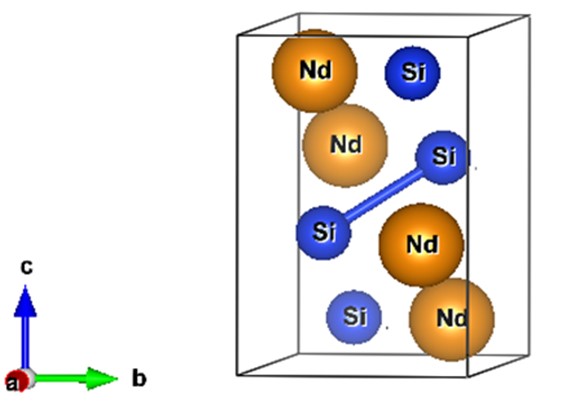
    Electronic, magnetic properties and magneto-caloric effects of NdSi Monte Carlo study

    by M. Abbasi, R. El Fdil, N. Ennassiri, R. Essajai, E. Salmani, H. Ez-Zahraouy
    Clean Energy Science and Technology, Vol.3, No.2, 2025;
    290 Views

    The increasing focus on rare-earth-based intermetallic materials has intensified the search for compounds capable of delivering superior performance in low-temperature magnetic refrigeration systems. In the present work, we theoretically examine the electronic, magnetic, and magnetocaloric characteristics of the NdSi intermetallic compound by employing a hybrid computational approach that combines density functional theory (DFT) and Monte Carlo simulations. DFT results indicate a magnetic moment of approximately 3.36 µB per Nd3+ ion. To further assess the magnetic response, Monte Carlo simulations were conducted using DFT-derived exchange coupling constants as input, enabling analysis of magnetic ordering, isothermal magnetic entropy variation, and relative cooling power (RCP) near the Curie temperature (Tc = 47 K). The computed peak value of the magnetic entropy change (ΔSm) is 12.1 J·kg1·K−1, while the corresponding RCP reaches 201 J·kg−1 under an applied magnetic field change of Δh = 0–5 T. These outcomes underline the excellent magnetocaloric potential of NdSi, suggesting its viability as a high-efficiency, low-temperature refrigerant and a compelling substitute for other intermetallic systems in next-generation cooling technologies.

  • Open Access

    Article ID: 313

    Blue core discharge characteristics in an inhomogeneous magnetic field helicon plasma coupled with multi-turn solenoid antenna

    by Meng Sun, Xianyi Yin, Tianliang Zhang, Renze Wei, Zhongwei Liu, Haibao Zhang
    Clean Energy Science and Technology, Vol.3, No.2, 2025;
    370 Views

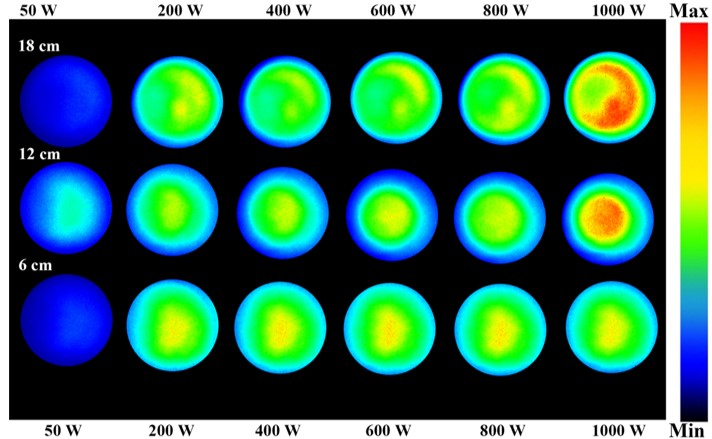
    A four-turn solenoid antenna has been used to produce high-density helicon plasma in an inhomogeneous magnetic field. Different magnetic field needed for the helicon plasma discharge can be realized easily by moving the axial positions of the solenoid antenna. Three different axial positions, e.g., 6 cm, 12 cm, and 18 cm, had been selected to fix the four-turn solenoid antenna; correspondingly, the magnetic field intensities were 7.69 G, 30.77 G, and 123.08 G, respectively. It was found that the blue core phenomenon appeared at around 300 W and an antenna position of 18 cm. The plasma density can be up to 2 × 10¹⁹ m−3 with an antenna coupling efficiency of 90% at 600 W in the blue core. The power coupling mechanism has been discussed based on the helicon plasma discharge diagnostics.

  • Open Access

    Article ID: 335

    Hybrid Artificial Bee Colony and incremental conductance—Algorithm for enhanced MPPT in photovoltaic systems

    by Ahmed G. Abo-Khalil, Abdel-Rahman Al-Qawasmi, AlAmir Hassan
    Clean Energy Science and Technology, Vol.3, No.2, 2025;
    383 Views

    The growing global demand for electricity necessitates efficient renewable energy solutions, with photovoltaic (PV) systems emerging as a prominent candidate. This study presents a novel hybrid Maximum Power Point Tracking (MPPT) algorithm that integrates the Artificial Bee Colony (ABC) optimization method with the Incremental Conductance (IC) technique, ensuring 100% accurate identification of the Global Maximum Power Point (GMPP) under partial shading conditions. Unlike standalone MPPT methods, the proposed approach leverages the exploratory capabilities of ABC for global search while utilizing IC for fast and precise tracking, achieving a convergence time of 0.37 s and minimal power oscillations of 2.7%. Experimental validation demonstrates the algorithm’s superior performance, attaining 100% efficiency, significantly outperforming standalone IC (74%) and ABC (99.5%) methods. The hybrid ABC-IC algorithm consistently tracks the GMPP, delivering 60 W under optimal irradiation (1000 W/m2) and surpassing conventional techniques such as P&O, FA, and PSO in terms of convergence speed, robustness, and adaptability to dynamic shading conditions. This innovative integration of bio-inspired and deterministic MPPT strategies offers a highly efficient and reliable solution for maximizing PV energy harvesting in real-world environments.

  • Open Access

    Article ID: 305

    Inverting tristate step-up converter

    by Felix A. Himmelstoss
    Clean Energy Science and Technology, Vol.3, No.2, 2025;
    293 Views

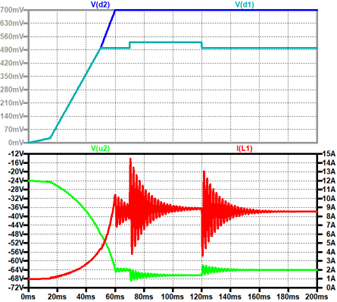
    The here-treated step-up converter with two interference possibilities has several interesting features. First the output voltage is inverse to the input voltage, second the voltage transformation ratio is linearized, third the dynamic behavior is that of a phase-minimum system, and fourth the stress of the electronic switches is reduced. The function of the converter is explained, the steady state presented, the large and small signal models are derived, and the Bode plots concerning the output voltage around the operating point are given. The start-up is investigated. LTSpice is used to check the considerations.

Review

  • Open Access

    Article ID: 426

    Advances and challenges in discharge plasma-assisted catalyst synthesis and surface engineering

    by Baolin Yu, Yuting Gao, Bohan Chen, Liangping Xiao, Rusen Zhou
    Clean Energy Science and Technology, Vol.3, No.2, 2025;
    293 Views

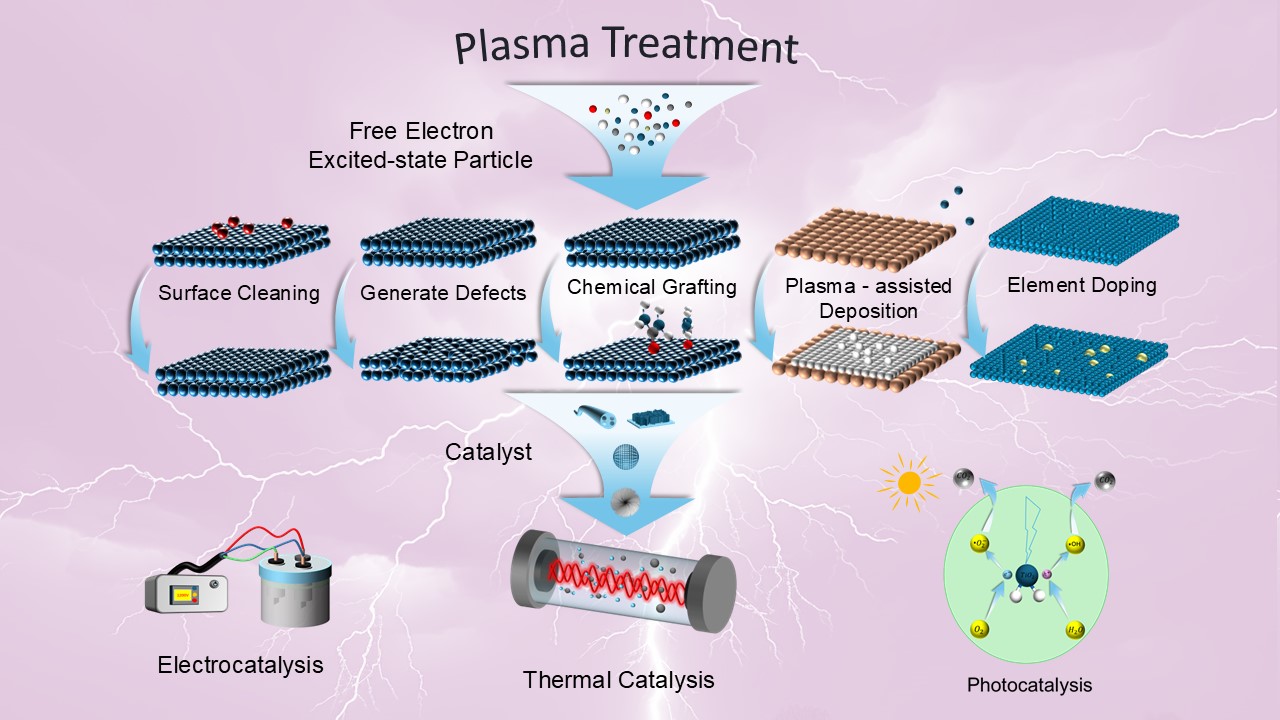
    The application of discharge plasma in catalyst preparation and modification is reviewed in this paper. Catalysts play a crucial role in various fields, and discharge plasma, with its unique physicochemical properties and environmental friendliness, shows great potential in the preparation and surface engineering of catalysts. Plasma can effectively activate reactant molecules under mild conditions, thereby enhancing the reaction rate, and regulate the microstructure and active site distribution of the catalysts, thereby improving the performance of specific catalytic reactions. In this paper, different plasma sources and discharge fundamentals are reviewed, mainly emphasising on the application of plasma in catalysts preparation and surface modification. The advantages and applications of plasma-assisted catalyst synthesis, plasma chemical vapor deposition and plasma atomic layer deposition are discussed. The modification effects of plasma on the physical and chemical properties of catalysts are analyzed, and the effects of these modifications on different reaction types and their mechanisms are outlined. Finally, future research directions and challenges are discussed to offer reference for the development of discharge plasma technology in material and catalysis sciences.

  • Open Access

    Article ID: 370

    Recent advances in the application of plasma technology in hydrogen energy research

    by Pengfei Dou, Tiange Qi, Shaofeng Xu, Ying Guo, Jianjun Shi, Xiaoxia Zhong
    Clean Energy Science and Technology, Vol.3, No.2, 2025;
    872 Views

    Hydrogen energy is one of the potential solutions for achieving carbon neutrality. Plasma technology plays an auxiliary role in the production, transportation, and utilization of hydrogen energy. Particularly, plasma, which is excited by renewable electrical energy, is a green and alternative technology for hydrogen energy production. This review summarizes the role of plasma technology in the hydrogen energy field in recent years, with a focus on plasma’s applications in water electrolysis for hydrogen production, methane cracking, ammonia cracking, and ammonia synthesis. The role of plasma in aiding the synthesis of water electrolysis catalysts is primarily reflected in three aspects: etching micro-grooves on the catalyst substrate, creating catalyst vacancies, and enhancing atomic modification. In methane and ammonia cracking to produce hydrogen and ammonia synthesis, the role of plasma is primarily to improve the performance of the process by means of combined catalysis. Given the importance of plasma in catalyst preparation, we recommend using machine learning-assisted high-throughput screening to obtain the best theoretical catalyst structure and then using plasma for targeted catalyst synthesis. Meanwhile, first-principles calculations should be used to clarify the catalytic mechanisms of the catalysts.

  • Open Access

    Article ID: 310

    Research advances in utilization of CO2 resources for oxygen production in Space Station and Mars environments

    by Qiang Fu, Zifan Ye, Jialun Luo, Honglin Guo, Luyao Liu, Zhengshi Chang
    Clean Energy Science and Technology, Vol.3, No.2, 2025;
    447 Views

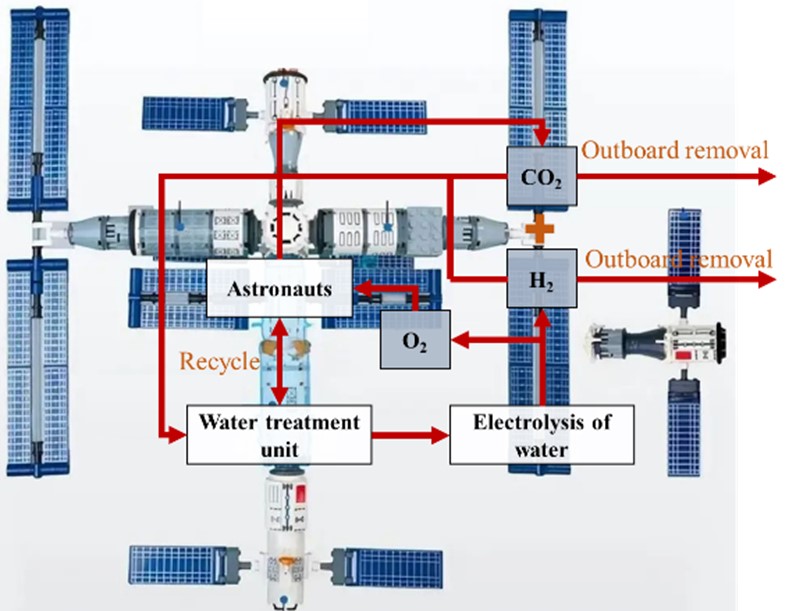
    The establishment of stable cycling of CO2 and O2 is essential for Environmental Control and Life Support Systems (ECLSS) in extraterrestrial environments, particularly for long-duration missions aboard Space Stations and future Martian bases. The development of CO2-to-O2 technologies demonstrating superior oxygen recovery rates, enhanced CO2 conversion efficiency, and optimized energy efficiency is critical for achieving closed-loop material regeneration. This review systematically examines technological status in extraterrestrial CO2-to-O2 conversion, categorizing emerging approaches into two frameworks: “two-step oxygen generation” and “one-step oxygen generation”. Two-step oxygen generation includes thermal catalytic CO2 hydrogenation reduction and electrolysis of water for O2 production, which are primarily utilized in Space Station; one-step oxygen generation encompasses electrocatalytic reduction of CO2 and plasma catalytic CO2 conversion, which are predominantly employed in Martian environments. Through comparative analysis of underlying principles and operational characteristics, we identify three critical challenges impeding technological maturation: (1) The deactivation of catalytic materials, the formation of carbon deposits, and the inadequacy of catalytic mechanisms; (2) the description of the transformation process is unclear, making it challenging to regulate the conversion. Additionally, suppressing side reactions proves to be difficult; and (3) the degree of recycling for a single technological substance is relatively low. The development of effective, efficient, stable, and reliable CO2-to-O2 technology will provide a solid foundation for reducing launch costs and ensuring sustainable human habitation in extraterrestrial environments.

  • Open Access

    Article ID: 294

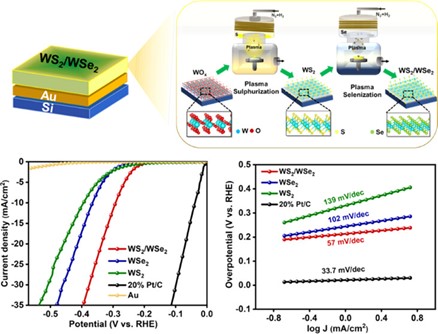
    Transition metal dichalcogenides-based electrocatalysts for green hydrogen production via water electrolysis: Design principles and modulation strategies

    by Dai Zhang, Ying Guo
    Clean Energy Science and Technology, Vol.3, No.2, 2025;
    740 Views

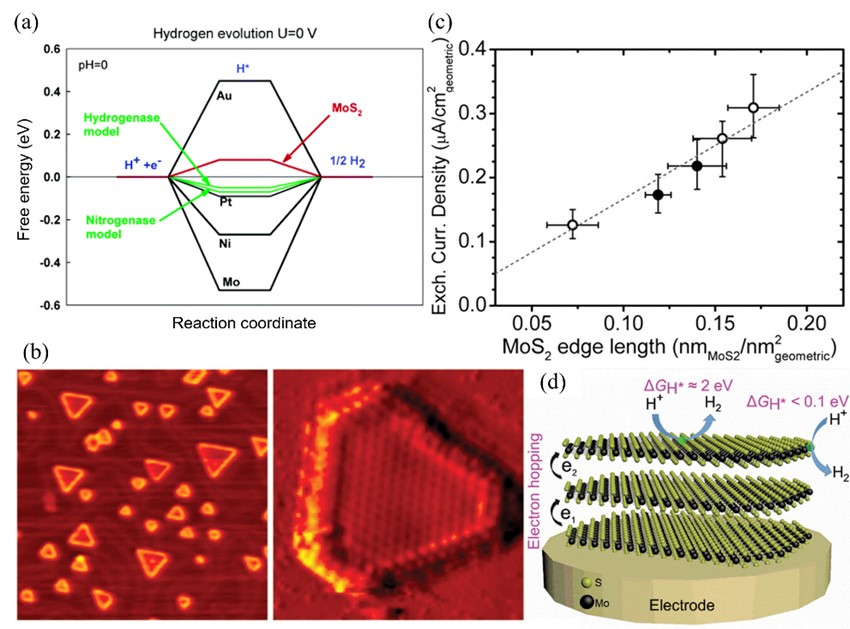
    The development of renewable energy-powered water electrolysis technology serves as a crucial prerequisite for realizing the large-scale application of hydrogen economy. Currently, commercial catalysts for water electrolysis predominantly rely on platinum-group noble metals, whose scarcity and exorbitant costs significantly hinder practical implementation of hydrogen production through water splitting. As promising alternatives to noble metal catalysts, transition metal dichalcogenides (TMDs) have attracted considerable research attention due to their high intrinsic catalytic activity and cost-effectiveness. Nevertheless, the catalytic performance of TMDs still lags behind that of noble metal benchmarks, prompting extensive and systematic investigations into performance enhancement and catalytic mechanisms. This review comprehensively summarizes strategic approaches for optimizing the electrocatalytic performance of TMDs in water electrolysis, integrating fundamental reaction principles, rational design philosophies for electrocatalysts, and the structure-property relationships of TMDs. Finally, we provide insightful perspectives on current challenges and future research directions in this rapidly evolving field.

  • Open Access

    Article ID: 365

    A review on the application of low-temperature plasma in the modification of key materials for aqueous zinc-ion batteries

    by Qi Qi, Yanan Guo, Chenpei Huang, Chenyu Fan, Jingjing Xu, Xin-Yao Yu
    Clean Energy Science and Technology, Vol.3, No.2, 2025;
    476 Views

    In the context of the global energy transition, zinc-ion batteries (ZIBs) have attracted widespread attention due to their environmental friendliness, low cost, and high safety. However, the development of ZIBs faces many challenges, including dendrite growth, performance degradation of cathode material, and interface side reactions between electrode and electrolyte. The solution of these problems relies heavily on the properties improvement of the key materials of ZIBs. Low-temperature plasma (LTP) technology, with its high energy, high activity, low temperature, and high efficiency, offers advantages such as flexible process control, a wide range of applications, mild operating conditions, and environmental friendliness, providing an innovative approach for the modification of key ZIB materials. The application of LTP technology in the modification of key materials for ZIBs, such as zinc anodes, cathode materials, and separators, is reviewed. In which the focus is on the electrochemical performance optimization of the zinc anodes by LTP modification technology. Finally, the problems, challenges, and future directions of efforts in the application of LTP technology for the modification of key materials for ZIBs are discussed.